

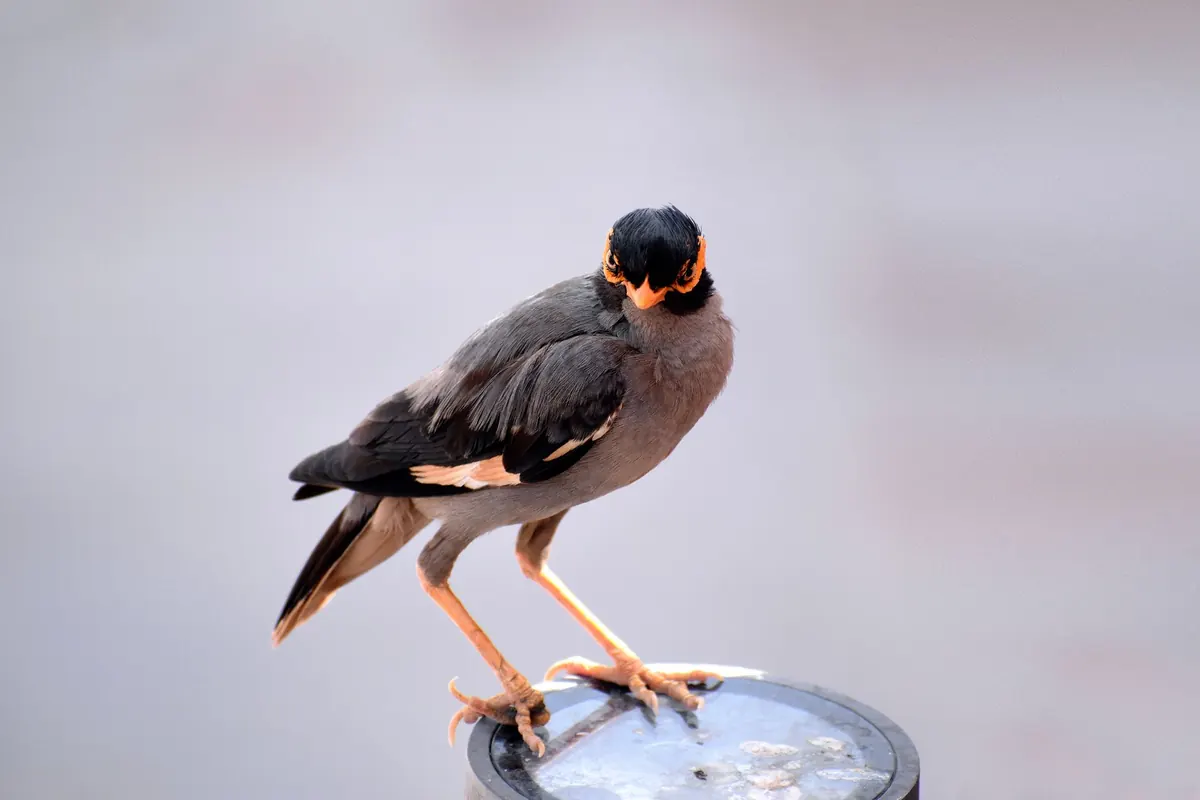


The alarm goes off at 4am and you wonder, briefly, why you agreed to this. Then you open the car door and the wood is already loud: a blackbird pouring notes out of a hedge, a song thrush repeating itself somewhere beyond, a robin thin and silvery much closer. The dawn chorus is the best free wildlife spectacle in Britain, and it keeps to a timetable. Learn that timetable — who sings when, in which months, and under what conditions — and a sleepy stumble becomes something you will want to repeat every spring.
Why birds sing at dawn
Two things are happening at once: territory and advertising. A male that has survived the night needs to reassert his patch and make himself heard by mates, and dawn is the cheapest time to do it. The air is cool, still and often slightly damp, which carries sound further than the warm, turbulent air of midday. There is little wind to snatch notes away, and none of the rising thermals that blur sound later on.
Time matters too. At first light there is often not enough light for small insect-eaters to feed efficiently, so singing costs a bird less than it would at ten in the morning. Eye size plays a part in who dares to start: robins, blackbirds and song thrushes have relatively large eyes and can find their way about in near-darkness, while warblers need more light before they commit to a song.
The running order: who sings when
Nobody conducts, but the sequence is surprisingly consistent across Britain. Robin and song thrush usually open proceedings, sometimes a full hour and a half before sunrise. In towns, robins will sing under streetlights right through the night. Blackbird follows, then wren, dunnock, great tit and chaffinch. As the light strengthens, the summer migrants join in: blackcap, chiffchaff, willow warbler, whitethroat, garden warbler. Last come woodpigeon and collared dove, whose lazy cooing often sees you back to the car.
- Very early, up to 90 minutes before sunrise: robin, song thrush
- Early: blackbird, mistle thrush, wren, dunnock
- Around sunrise: great tit, blue tit, chaffinch, greenfinch, goldcrest
- After first light: blackcap, chiffchaff, willow warbler, whitethroat, garden warbler
- Latecomers: woodpigeon, collared dove, goldfinch
Treat this as a rough guide rather than a fixture list. Habitat decides a great deal: a wood without song thrushes will not have one at the front of the queue, and a bare arable field will have almost nothing at all. On a cold, breezy morning the whole chorus can start late and fizzle out within twenty minutes.
What you will actually hear
You do not need to know fifty songs. Six or seven learned properly will carry you through most of a spring morning, and the rest will come with repetition.
- Blackbird: rich, unhurried and fluty, with a pause between phrases and a faint squeaky note at the end.
- Song thrush: repeats each phrase two or three times before moving on. That repetition is the giveaway.
- Robin: a thin, wistful trickle of notes, often delivered from deep cover in near-darkness.
- Wren: astonishing volume for such a small bird, a rattling burst that ends in a hard trill.
- Dunnock: quiet, hurried and high-pitched. Easy to miss, and often mistaken for a wren.
- Great tit: a clear two-note phrase, or the squeaky-bicycle-pump song.
- Chiffchaff: says its own name, tirelessly. Willow warbler: a soft, descending cascade.
- Blackcap: a fluty warble that starts scratchy and grows sweeter as it goes.
The best UK months for a dawn chorus
March is for residents only. Robins, blackbirds, song thrushes and dunnocks are in good voice, but the chorus starts later — often around 5.30am or later — and is thinner than it will become. The advantage is that you can be back home for breakfast without ruining your day.
April is when it lifts. Chiffchaffs and blackcaps arrive, great tits and chaffinches are at full volume, and the start time creeps earlier by a few minutes each week. If you only manage one outing, this is a generous month.
May is the peak. Every summer visitor is in, residents are still singing, and the chorus can begin a good hour and a half before sunrise. In the south of England that can mean 4am or even earlier. It is worth the lost sleep. Swifts scream overhead later in the day, but they are not part of the dawn performance.
June fades as the month goes on, as birds switch to feeding young and many go quiet to moult. Early June is still rewarding, especially in the north and at higher ground where the season runs later. September brings a small revival, with robins and a few others singing again, but nothing like the spring.
Conditions that make a good morning
Weather decides more than most people expect. The ideal is a mild night, a light or non-existent breeze, and high pressure — a still, slightly overcast dawn is often better than a clear, cold one. Wind is the enemy of listening: it drowns the quieter songs and pushes birds into sheltered cover where you cannot hear them well. Drizzle is tolerable, and sometimes rather atmospheric, but heavy rain shuts most birds up.
Aim to be in position 60 to 75 minutes before sunrise, and check the exact time for your location rather than guessing. Coastal and northern spots have noticeably later sunrises than Cornwall, and the chorus shifts with them.
Planning your dawn chorus outing
A little preparation makes the difference between a pleasant hour and a cold, confused one.
- Check sunrise, then work backwards. Be on site an hour before it. Arriving as the chorus peaks means missing the best of it.
- Pick a sheltered spot with mixed habitat. A woodland edge, a hedgerow-lined lane, a mature park or a large garden all work well. Sit where two habitats meet — scrub beside woodland, or a hedge beside a meadow — and you will hear more species than in the middle of either.
- Avoid exposed hills and coast on breezy days. Drop down into a valley or behind a belt of trees instead.
- Dress warmer than you think you need to, take a flask, and add midge repellent from late May onwards.
- Stand still and stay quiet. Playback is not necessary and disturbs the birds; your own ears will do.
- Record songs on your phone for a few seconds each and check them later at home. It is the fastest way to learn.
- Stay on for half an hour after sunrise. The later arrivals — the warblers and the finches — are the ones most people never hear because they leave too soon.
Go once in late April or May and the order will start to stick. Within a couple of seasons you will be standing in the dark, hearing a robin before anyone else does, and knowing exactly which bird will sing next.
Photo: Pexels / Pixabay
Related posts
More stories you’ll love reading